Prevent Storm Damage and Failure Risks
Structural Support Techniques That Extend Tree Life
Understanding Structural Support Systems for Vulnerable Trees
Trees with structural weaknesses face significant risks during storms and high winds. When a mature tree develops multiple trunks, wide lateral branches, or weak branch unions, the weight distribution becomes unbalanced. Without intervention, these vulnerable points can split or fail entirely, especially during the severe thunderstorms and high winds common throughout Georgia from spring through early fall.
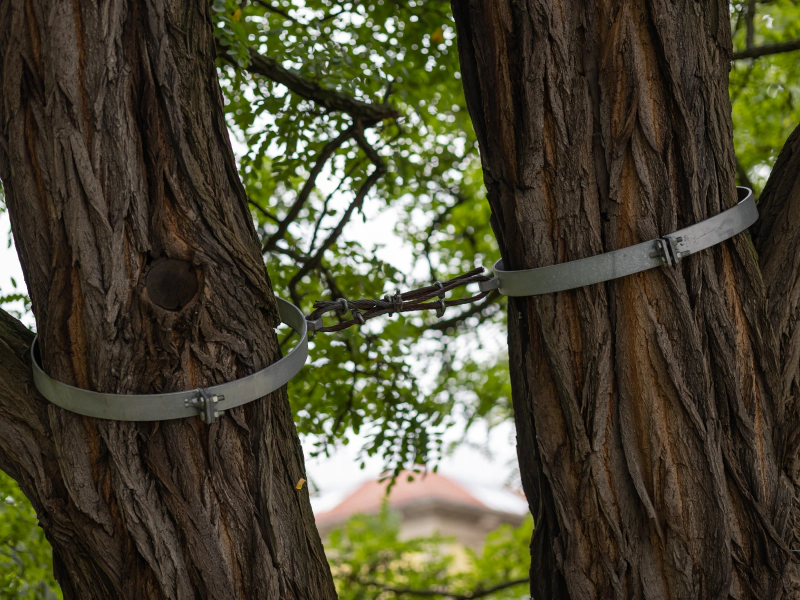
Structural support systems use high-strength steel cables and rigid braces to redistribute mechanical stress across a tree’s framework. Cables are typically installed in the upper two-thirds of the canopy, connecting limbs that would otherwise bear excessive independent load. Braces, by contrast, provide rigid support to weak unions or split trunks, preventing further separation. Together, these systems work to preserve trees that would otherwise require removal.
The decision to install support systems depends on several factors: the tree’s species, age, location, and structural condition. In Millen and surrounding areas, large water oaks and willow oaks frequently develop co-dominant stems that benefit from cabling. Similarly, older pecan trees with heavy horizontal limbs often need supplemental support to prevent breakage. A qualified arborist evaluates the tree’s overall health, identifies failure risks, and determines whether support systems will provide long-term stability or whether removal is the safer option.
Cable Installation Methods That Preserve Tree Health and Longevity
Proper cable installation requires precise placement and tensioning to provide support without restricting natural tree movement. The standard approach positions cables at approximately two-thirds the distance from the crotch to the branch tips, where maximum leverage can be achieved while minimizing stress on attachment points. Extra-high-strength steel cables, ranging from 3/16 to 3/4 inch in diameter depending on tree size, are threaded through lag hooks or eyebolts installed directly into the wood.
The installation process begins with a thorough inspection of the canopy to identify the optimal anchor points. Arborists drill pilot holes slightly smaller than the lag hardware diameter, then install threaded rods or hooks into sound wood. Cables are attached using forged steel thimbles and ferrules to prevent wire fatigue and ensure decades of service life. Proper tension is critical: cables must be snug enough to limit movement during stress events but loose enough to allow normal seasonal sway and growth.
Dynamic cabling systems represent an evolution in tree support technology. Unlike static steel cables, dynamic systems use synthetic rope with built-in elasticity, permitting more natural movement while still providing load distribution. These systems reduce the risk of abrasion damage and allow for incremental growth adjustments. For residential tree trimming projects in Millen, dynamic systems are increasingly popular for historic shade trees near homes where preservation is a priority. Regardless of the system type, regular inspection every two to three years ensures hardware remains secure and functional as the tree matures.
Bracing Applications for Split Trunks and Weak Union Repair
While cables address upper canopy stress, bracing systems provide rigid support at critical structural junctions lower in the tree. Braces consist of threaded steel rods installed through the trunk or branches, secured with washers and nuts on both ends. This hardware prevents existing splits from widening and stabilizes weak unions that have not yet failed. Bracing is particularly effective for trees with included bark in the crotch, a condition where bark grows between two stems instead of forming strong connective tissue.
The installation requires drilling completely through the trunk at a point below the weakness, typically perpendicular to the plane of potential failure. A threaded rod, usually 1/2 to 1 inch in diameter depending on the tree’s size, is inserted and tightened until it draws the two sections firmly together. Washers distribute the compressive force and prevent the hardware from pulling into the wood as the tree grows. Over time, the tree compartmentalizes around the installation, and the rod becomes permanently integrated into the structure.
In East Georgia, storm damage frequently creates partial trunk splits that are ideal candidates for bracing. After a severe weather event, property owners often face the choice between complete tree removal or attempting repair. When the cambium layer remains largely intact and the tree shows no signs of decay, bracing combined with selective tree pruning can restore stability and extend the tree’s functional life by decades. For commercial properties where mature shade trees provide aesthetic and environmental value, this approach offers a cost-effective alternative to removal and replacement. Bracing is not appropriate for every situation, particularly when decay or root damage has already compromised the tree’s structural integrity. A thorough evaluation determines whether the investment in hardware and labor will yield meaningful long-term results.
When to Consider Support Systems for Your Property’s Trees
Several common scenarios signal the need for structural support evaluation. Trees with co-dominant trunks that form a narrow V-shaped crotch are at elevated risk of splitting, particularly as they mature and the weight of each stem increases. Similarly, trees with large lateral branches that extend over structures, driveways, or high-traffic areas warrant assessment even if no visible cracks are present. The consequences of failure in these situations extend beyond the tree itself, posing serious safety and liability concerns.
Historic or specimen trees represent another category where support systems prove valuable. In Millen and the surrounding Jenkins County area, properties often feature century-old oaks or pecans that hold sentimental or landscape value far exceeding their replacement cost. When these trees develop structural issues due to age, prior storm damage, or improper pruning, proactive support installation can preserve them for another generation. This is particularly relevant for commercial tree service clients such as municipalities, parks, and historic sites where tree preservation aligns with broader conservation goals.
Newly identified cracks or splits require immediate attention. Even small separations in the bark can indicate deeper structural failure, and early intervention prevents minor problems from escalating. After ice storms or high winds, property owners should inspect large trees for new cracks, particularly in crotches and at previous wound sites. Residential emergency tree services often respond to situations where a partial failure has occurred but the tree remains salvageable with immediate bracing and corrective pruning. Timing is critical in these cases, as waiting allows decay organisms to colonize exposed wood and compromises the tree’s ability to compartmentalize damage.
Finally, trees that have undergone significant crown reduction or have had large limbs removed may benefit from temporary or permanent support as they redistribute their remaining weight. Proper evaluation includes not only visual inspection but also consideration of the tree’s growth rate, species-specific characteristics, and site conditions such as soil stability and wind exposure.
Long-Term Maintenance and Monitoring for Supported Trees
Installing support systems is not a one-time solution but rather the beginning of an ongoing maintenance relationship. Hardware inspection should occur every two to three years to verify that cables remain properly tensioned, lag hooks have not loosened, and no signs of abrasion or corrosion have developed. As trees grow, their cambium layer gradually expands around cable attachment points, which is normal and expected. However, if hardware begins to girdle the branch or trunk, adjustments or repositioning may be necessary to prevent damage.
Regular tree trimming and pruning complement support systems by reducing canopy weight and eliminating competing growth that could destabilize the structure. Removing deadwood, thinning dense foliage, and correcting imbalanced growth patterns all contribute to reducing mechanical stress on cables and braces. For properties in Millen with mature hardwoods, combining annual pruning with biennial hardware inspections provides a layered approach to tree health and risk management.
Storm damage assessment after significant weather events is another critical component of long-term care. Even well-supported trees can experience limb failure or partial uprooting if soil becomes saturated and winds exceed design thresholds. Following severe storms, a professional evaluation determines whether existing support systems performed as intended or whether additional reinforcement is warranted. In some cases, stump grinding and removal becomes necessary if the root system has been compromised beyond repair, but proactive monitoring often identifies issues before they reach that stage.
For property owners weighing the value of structural support versus removal, the return on investment depends on the tree’s condition, location, and the owner’s long-term plans for the property. Trees that provide significant shade, privacy screening, or aesthetic value often justify the cost of installation and maintenance. If you have concerns about a tree’s stability or want to discuss whether support systems are appropriate for your property, schedule a consultation to receive a detailed assessment and tailored recommendations.